
Interview with Elizabeth Searle, writer
The Lowell Chamber Orchestra sat down with author Elizabeth Searle, who adapted the play “Seven Rabbits On A Pole” into a libretto, and asked her about a few things.
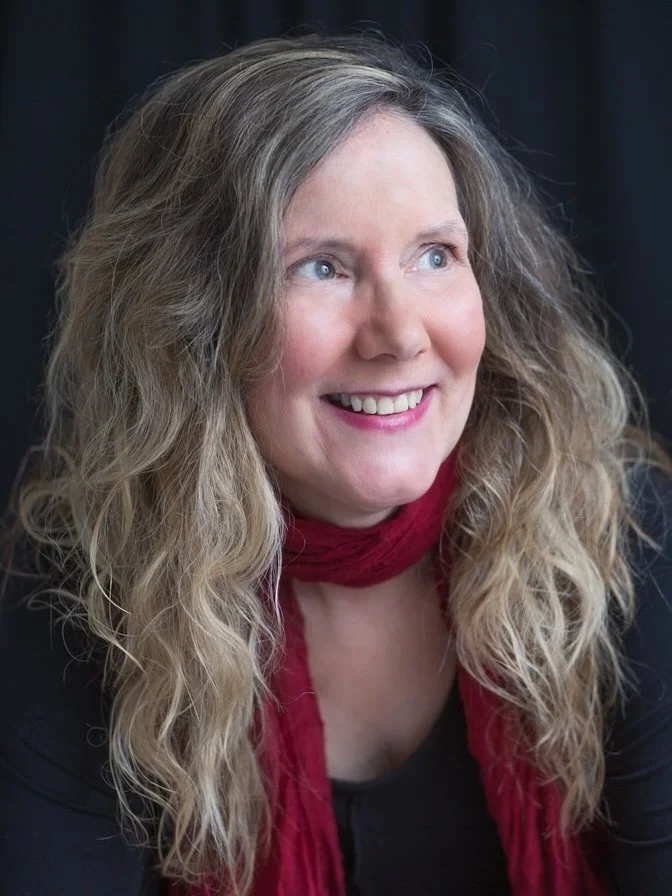
Elizabeth Searle
• What attracted you to Picardi’s original drama, and what did you discover in the process of adapting it for opera?
I loved the Play and would love to see it performed—I read it when Pasquale approached me about doing the opera. John Picardi writes my favorite kind of drama: alive with realistic tensions and infused, like life, with moments of dark comedy, sensuality, despair and joy. I felt he captured so much in this microcosm of one immigrant family. Also, having worked for several years in Special Education, I loved his rounded and engaging portrait of Julia.
• At its heart, what do you think this story is really about?
First, it’s a striking title in terms of the raw image of the dead rabbits on a pole—and it’s evocation of a ‘hobo’ living off the land and wandering with only a pole of rabbits. Also there is a big theme of LOSS in this work and you could see the dead rabbits as representing the wife and baby who died in one of the family’s back-stories and also the dead dreams of Enio.
• Did working on the opera change the way you thought about the immigrant experience in America?
My great grandfather came to this country from Ireland with nothing built his own house in Rhode Island, so I knew some stories of struggle from my family but from my grandparents so I didn’t experience that myself in the way Pasquale did. Yes, I feel this piece put me inside an Immigrant family experience and you feel the frustrations of Enio as he works hard to make ends meet and is lured into a terrible decision in his past, partly by the pressures he feels to support his family and also the pressures he mentions of feeling ‘shame’ over the daughter he loves and comes to respect. I feel by the end of the play he is more in touch with his roots in a culture that values family and is connected to the natural world and not so ruled by ambitions.
• Were there moments in the story that were particularly difficult—or particularly moving—to translate into music and theater?
To me, since I am most attached to the character of Julia, the hardest thing to write is a depiction of what happens between Julia and ‘Q’—something that she desires in a basic physical way but that also represents an older man taking advantage of this young vulnerable mentally challenged girl, so that is difficult material but I try to show the characters’ mix of feelings and to represent it and also the aftermath and Q’s sense of remorse, as well as Julia’s genuine and undying feelings for Q.
• How did the collaboration between composer and librettist work? Did the words ever change because of the music, or the music because of the words?
I feel we worked well together and had a give and take of suggestions. I agree we can continue to revise as we see what it looks like Onstage—I always feel scripts are rewritten ‘onstage’—one reason it is so crucial and helpful to have a staged concert version with Orlando and the Lowell Chamber Orchestra who we THANK.
• What has to change when dialogue written for a play becomes language that will be sung?
It has to be sing-able, of course, and I try to make it rhythmic while still sounding like ‘natural’ if stylized speech. I enjoy finding resonant poetic phrases and repeating them to give the singer/performers a chance to explore those lines and all their meanings. I also try as a librettist to find the most intense emotional moments and let those be the ones where each character gets a chance to shine and sing their hearts out in a kind of musical monologue.
• How do you decide which words need to remain and which moments are better left to the composer and the music?
As Pasquale notes above, I agree that we worked well together, taking and giving suggestions. I am glad that Pasquale is a seasoned composer with lots of experience. I am fairly new to classical opera but eager to learn and always eager as a writer to try new forms.
• How did you approach writing characters whose experiences belong to a particular historical and cultural moment while making them emotionally immediate for audiences today?
I feel the play does a good job of making these characters relatable, with universally understandable emotions like ambition, longing, grief, shame. And as Pasquale notes in his answers, this play—while set in the 30s— takes on very timely themes such as rights for the Disabled, abortion, class struggles and most of all the hot-button issue of our times, Immigrataion.
• Although the story takes place in an earlier America, what do you hope contemporary audiences recognize in it today?
I think Pasquale says it well—all the issues connected to Immigrant and to mentally challenged people are still being dealt with today and still very controversial so this opera has great relevance, I feel, in current times.
• What do you hope an audience feels or thinks about when they leave a performance?
Again, I echo what Pasquale says above, and I especially hope they feel that empathy for Julia and come away touched and inspired by all that she is faced with and how she comes through it with her loving playful hopeful nature. Also I hope they see how the very different Enio goes through his own dark journey into facing the demons of his past but emerging better able to embrace and accept his offspring as they are and stop trying to change them all.
• Is there a line or scene in the libretto that took on a different meaning once you heard it sung?
Yes, Julia repeating ‘Seeds’ over and over—in performance with a longing that suggested her buried desire to nurture the ‘seed’ of a child.