
Corelli - Concerto grosso in G minor 'Fatto per la Notte di Natale', Op.6 No.8
Arcangelo Corelli’s "Christmas Concerto" glows with a quiet, luminous beauty — a musical gift wrapped in reverence and joy.
Composed around 1690 and published posthumously in 1714, this Concerto Grosso was commissioned by a patron for Christmas Eve celebrations, and bears the inscription “Fatto per la notte di Natale” — "Made for the night of Christmas.” Structured in six short movements, Corelli’s concerto moves between lively dances and tender reflections, embodying the spirit of both festivity and devotion. The music never shouts; instead, it shimmers — unfolding with a gentle grandeur, as if lit by the soft glow of candlelight. The early movements weave a tapestry of contrasts: brisk Allegros, expressive Adagios, and courtly dances that seem almost to float on air. The writing is elegant and intimate, with soloists and ensemble exchanging phrases like an affectionate conversation among friends.
Hindemith - Trauermusik
In a single evening of sorrow and inspiration, Paul Hindemith’s Trauermusik was born. On January 21, 1936, Hindemith, already in London for a concert, learned that King George V had died the night before. In an extraordinary act of musical tribute, Hindemith composed Trauermusik — “Music of Mourning” — in just a few hours, rehearsed it briefly, and premiered it that same night in a live radio broadcast with the BBC Symphony Orchestra. Scored for viola (Hindemith’s own instrument) and strings, Trauermusik unfolds in four connected sections, each marked by solemn restraint and profound emotional clarity. At the heart of Trauermusik lies a setting of the chorale “Vor deinem Thron tret’ ich hiermit” (“Before Thy Throne I Now Appear”), a melody also famously arranged by J.S. Bach in his final days. In Hindemith’s hands, the chorale becomes a tender farewell — a gesture of reverence, humility, and peace. Though composed under the pressure of tragedy and time, Trauermusik endures as one of Hindemith’s most moving and direct expressions: a solemn prayer, a musician’s offering, and a timeless reflection on loss and remembrance.
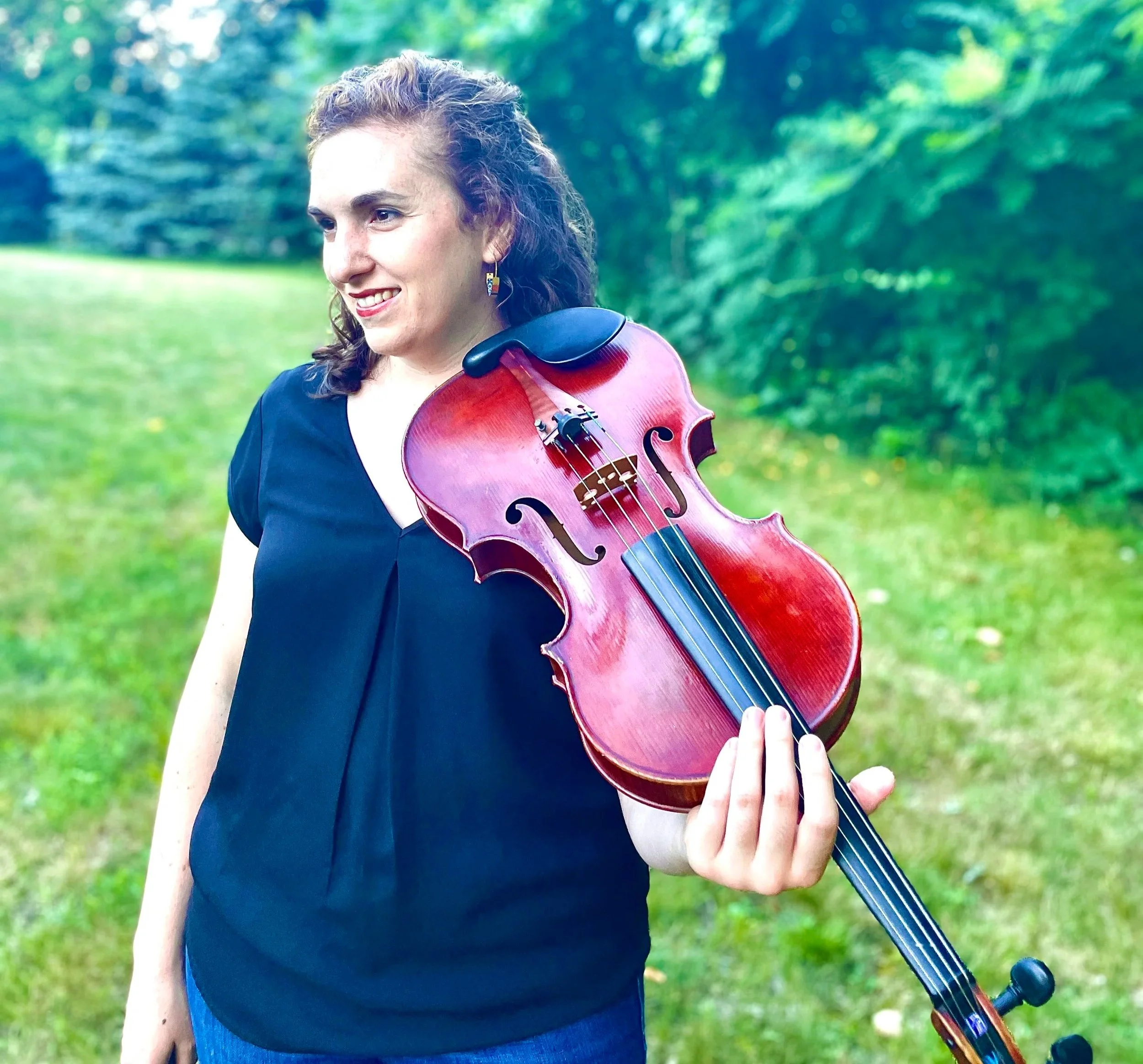
Jessica Cooper
Jessica Cooper, LCO’s principal viola, is a Boston based freelance violist who has performed across North and South America in renowned venues including Carnegie Hall, Boston Symphony Hall, and Teatro del Lago (Chile). She is a founding member of the Cape Cod Chamber Orchestra. Jess recently made her Celebrity Series debut as guest principal violist with Unitas Ensemble; other recent performances have been with the New Bedford Symphony, Rhode Island Philharmonic, Plymouth Philharmonic, Opera Neo (San Diego), and Music Worcester among others. A passionate chamber musician and innovator, Jess is a co-founder of Spectacle Collective, a non-profit arts organization that brings classical music into conversation with other live performance styles, such as theater, puppetry, and circus arts, to create unique interdisciplinary experiences. Jess earned both an MM and PD in viola performance from Boston University under the tutelage of Daniel Doña and Michelle LaCourse. She also holds a BA in both viola performance and Spanish from Bates College, where she studied viola with Robert Dan. Her other principal teachers have been Jane Starkman, Penelope Knuth, and Carlos Boltes. Jess enjoys teaching viola and violin lessons to students of all ages, and currently teaches a studio of private students as well as being a faculty member at the Shrewsbury Public Schools. When Jess is not spending time with her viola, she enjoys testing out new recipes and open water swimming at Asnamcomet Pond.
Skolos, Fantasia Folia

Composer Nancy Skolos
Fantasia Folia for String Orchestra takes its inspiration from the transformation of nature during the fall. Movement I, First Fall, begins with a sequence of pizzicato notes cycling through each instrument, echoing the falling of the first autumn leaves. Harmonies, textures, and colors gradually accumulate, evoking a sense of longing for the fleeting beauty of fall. Movement II, Frozen Elegy, explores the delicate beauty of a single fallen leaf, its curls, folds, and shimmering surface coming alive as it turns in the light. Moving between order and chaos, this section reflects the enduring coherence and magic of the leaf's intricate life force, even in its cold, still state. In the final movement, Wind Dance, the tempo picks up with energized strings, suggesting gusts of wind scattering leaves in a chaotic swirl. As the piece approaches its conclusion, the intensity gives way to a peaceful lullaby, as if to wish the trees a restful sleep until spring. Fantasia Folia invites listeners to reflect on the beauty of transition and captures the essence of fall in a sonic landscape.
JS Bach, Brandenburg Concerto No. 3, BWV 1048
J.S. Bach’s Brandenburg Concertos are some of the most joyful, inventive, and endlessly fascinating works in the Baroque repertoire. Presented to the Margrave of Brandenburg in 1721, they are less a formal commission and more a dazzling musical portfolio — a collection of vibrant, boundary-pushing experiments in sound and form. Among them, the Third Brandenburg Concerto stands out for its brilliant energy and bold design. Scored for an unusual ensemble of three violins, three violas, three cellos, continuo, and harpsichord, the work turns the orchestra into a dynamic, intertwining tapestry of nine equal voices. There is no traditional soloist; instead, the spotlight constantly shifts, with every player stepping in and out of the musical conversation. More than 300 years later, the Brandenburg Concerto No. 3 still astonishes with its daring, its intricate beauty, and its sheer zest for life - a celebration of the endless possibilities of sound in the hands of a master.
This concert is part of Middlesex Community College’s A World of Music Concert Series