
Interview with Pasquale Tassone, composer
The Lowell Chamber Orchestra sat down with composer Pasquale Tassone, who wrote the opera “Seven Rabbits On A Pole” which you can hear on our upcoming October 3 concert.
• What first drew you to Seven Rabbits on a Pole, and what made you feel this story needed to become an opera?
Having grown up in an immigrant family, I was immediately drawn to the play when I first saw it performed around 2008-2009. I was familiar with that type of upbringing where as an immigrant or a child of immigrants, one literally lives in two worlds. I had the Italian world at home and then I had the outside, American world where I went to school, and tried to blend in as an American. So while my family wasn't quite as dysfunctional as the Padroni family, I can relate to many of the issues of their everyday life.
• At its heart, what do you think this story is really about?
I never honestly asked John Picardi, the author, what the title was about. However, I believe that much like the rabbits that Q kills and sells to try to eke out a living, and all the other characters in the play, are confronted with issues and situations about which they must make a choice and which often seem beyond their control.
• Did working on the opera change the way you thought about the immigrant experience in America?
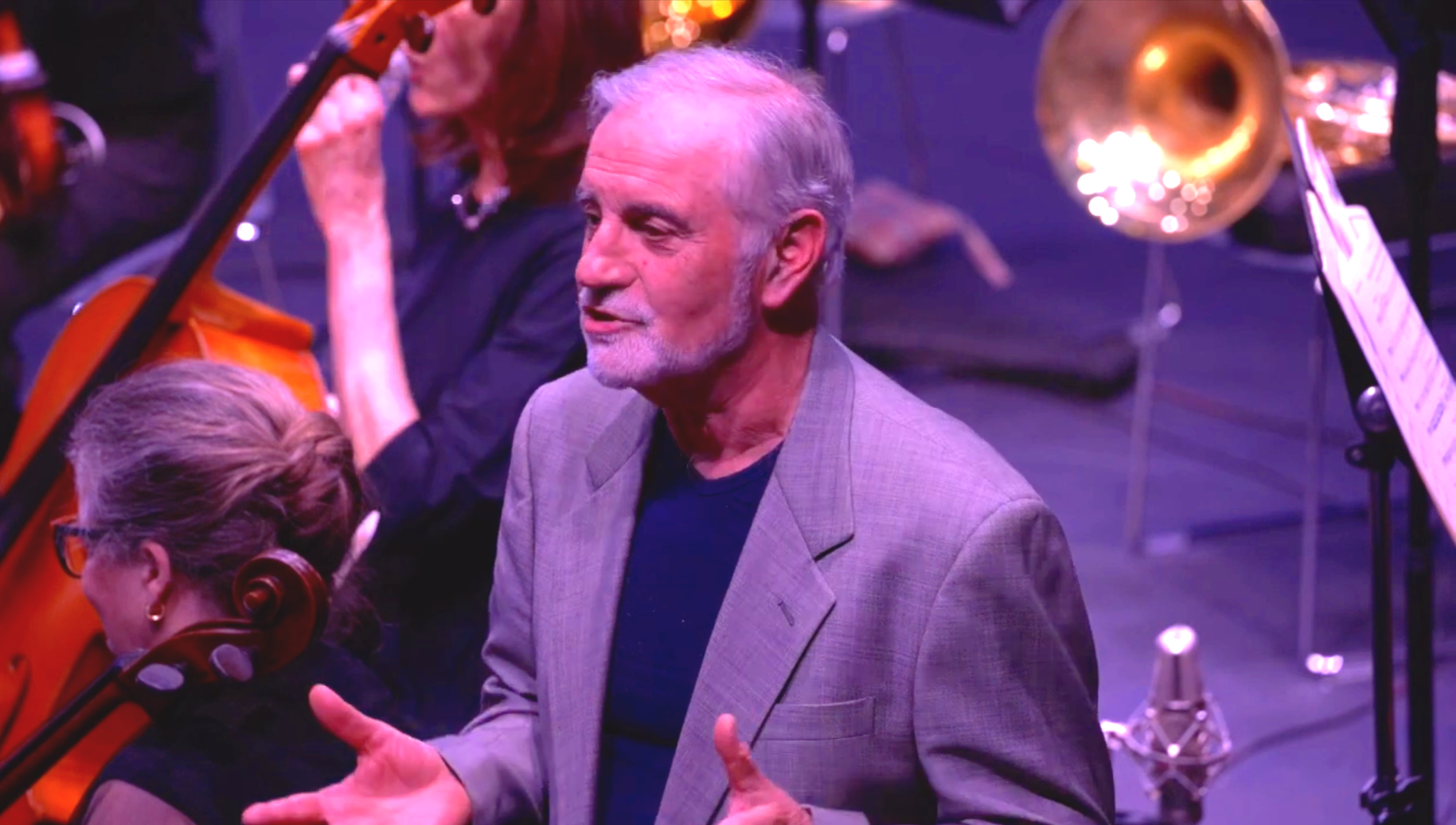
Pasquale Tassone
I'm not sure that it changed my thoughts about immigrant life in America. In the history of America, I believe that every immigrant group has experienced or will experience a kind of trial by fire-especially if they've come from a culture that is unlike the American culture. Upon arrival most immigrant groups faced various forms of discrimination, whether it be because of language, looks, method of dress etc. Right here in the Boston area, the Irish, Jews, Italians and more recently Asians have had their problems until their future generations, through education and economic advancement, are able to achieve goals denied to their ancestors. Eventually they seem to find their niche in American society. I believe that continues to this day and will continue as long as people want to come to America.
• Were there moments in the story that were particularly difficult—or particularly moving—to translate into music and theater?
When writing the music, I think the most difficult part for me was making sure that I was being honest with the way I musically represented each of the characters. I guess I was always second-guessing myself as to whether I did this character justice or not and then to translate that into an emotional musical experience that would relate to an audience. We'll find out when the performance is over if I've succeeded.
• How did the collaboration between composer and librettist work? Did the words ever change because of the music, or the music because of the words?
Because back in 2011 we had the opportunity to workshop a short part, in essence the first scene, with graduate students at the Longy School of Music we were able, after that performance, to assess and see where the story had to go and and consequently we changed quite a few things. Elizabeth and I have worked very well. I think I can speak for both of us that we were both receptive to each other's suggestions and we did some rewriting along the way. As I assume happens with most operas, I am expecting that going forward there'll be some more rewriting once we see what it looks like on stage.
• Although the story takes place in an earlier America, what do you hope contemporary audiences recognize in it today?
The issues that are touched upon in the opera such as the immigrant experience, the discrimination that immigrants face, the trials and tribulations of making a living in a new culture, not to mention the more the more personal ones such as abortion, dealing with a mentally-challenged adult who in our story is only physically an adult. I feel that in that sense it really speaks to what we're experiencing in today's American society. And these are themes that I believe are always going to be relevant and unfortunately controversial.
• What do you hope an audience feels or thinks about when they leave a performance?
Although the audience will not get the benefit of the full story in this partial, concert performance of four scenes, I nevertheless hope that the audience will walk away with a feeling that each of the characters has been treated honestly, and realize that each character has his or her own story, which of course enriches the larger story that the opera is telling us. And, while we can always point to the flaws in each of the characters, I also hope that the audience walks away with a degree of empathy for each of them.
• As a composer with Italian-American roots, did you feel a personal connection to this story?
As someone who grew up in an immigrant home, I very much felt a connection to the culture of the Padroni family. And as I mentioned before, while my family wasn't quite as dysfunctional as the Padroni family, I know we faced many of the issues albeit in a different time period.
• How did you create a musical language for this particular family without simply imitating Italian folk music or music of the period?
I really didn't set out to consciously create a new type of music and certainly not music that imitated Italian music or any other kind of music of the era. I think the point for me was that while Enio, the patriarch of the Padroni family was an immigrant, the children were born in America and therefore they were growing up as Americans. So, I didn't feel the need to resort to anything referencing Italian music. There was one happy moment in the opera. where Enio is in a very happy state of mind. He thinks things are going well and he asks that they sing and dance. I was not interested in writing anything that sounded ethnically Italian and wrote a little bit of happy music that might be reminiscent of a Tarantella but would be difficult to identify this Italian music. It goes without saying that the weight of music in general and opera in particular weigh very heavily in Italian culture and in fact in our story, Enio sings of the time when as a young boy, he met the great Puccini, who happened to be traveling through his village (anything is possible in opera!!) instilling in him both a love of opera and the dream that he might one day aspire to be a famous opera singer--an unrealized dream that he poignantly laments in the opera.
• Are there particular characters or moments where the orchestra tells us something that the words alone cannot?
Oh that's a good question. I'm sure there are many more moments that I can't remember, but one that particularly stands out is when Q, the character with the rabbits, falls to his death in the Scene 6. and the Padronis realize that he has died. There was a moment of sadness on the part of Julia and also fear and terror at what had happened on their property. There I tried to evoke all of those emotions in the music that I wrote for that part. To me. that's one of the real poignant moments because I don't think anyone expected Q to die in the middle of the Opera.
• Was there one scene that immediately suggested music to you? Was there a scene that took a long time to find musically?
I believe that once I got into the project, every scene suggested some type of music, which of course I revised along the way, but I felt that the material always suggested different types of music throughout the scenes. I think a bigger issue for me was how to connect the various scenes and how to portray the correct moods to make it sound musically logical especially since the music never stops, I think that's a very important thing. How do you navigate the changes of mood?
• After living with this opera for so long, has your understanding of the characters changed?
Having lived with the opera for so long and being older than any of the characters in the play, I often tried to imagine myself at the age of the characters and ask myself what I would have done in their place. I believe every character was presented with difficult choices and I feel that my empathy for them has grown over the years as I ponder all the emotions that they might have experienced.